
Embroidery designs rarely come out perfectly on the first attempt. Even when the original artwork looks excellent on a computer screen, the embroidered result can reveal issues with stitch density, thread direction, spacing, colors, or small details. This is why professional Embroidery Digitizing Services usually include a revision process that allows customers to request reasonable changes before final production.
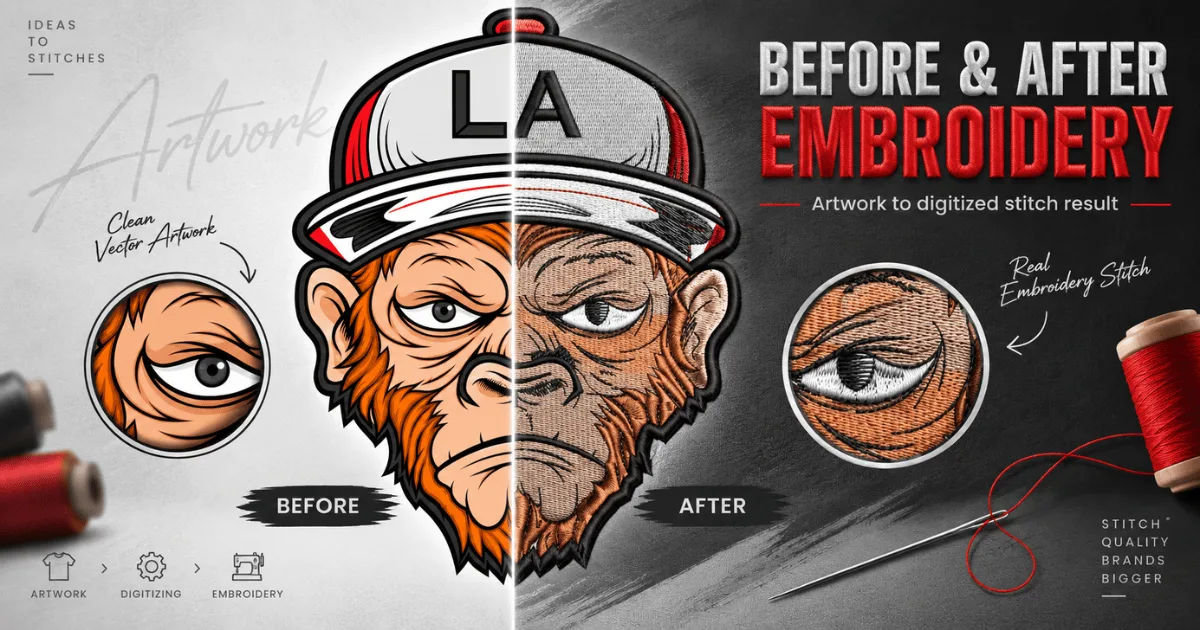
Revisions are an important part of turning artwork into a practical embroidery file. A good digitizer does more than simply convert an image into stitches. They review the design, understand how it will be embroidered, and make adjustments based on customer feedback and test results.
Understanding how revisions work can help businesses, clothing brands, promotional companies, and individual customers communicate more effectively with digitizers. It can also prevent delays, unexpected costs, and misunderstandings during the project.
What Is an Embroidery Revision?
An embroidery revision is a change made to an existing digitized design after the customer reviews it.
The revision might involve something simple, such as changing a thread color. It could also involve a more technical adjustment, such as reducing stitch density in a particular section.
Unlike editing a regular digital image, embroidery revisions require consideration of how stitches behave on fabric. A change that looks minor on screen can significantly affect the final embroidered product.
For example, increasing the size of a small lettering element may require a different stitch type. Similarly, changing the shape of a logo may require the digitizer to adjust stitch direction and sequencing.
Why Are Revisions Necessary?
There are several reasons why a digitized design may require revisions.
Artwork May Look Different as Embroidery
A logo designed for a website or printed brochure is not automatically suitable for embroidery.
Very thin lines, tiny text, gradients, shadows, and complex details may not translate effectively into stitches. During digitizing, some elements may need to be simplified.
After seeing the embroidery simulation or sample, the customer may decide that certain details need to be changed.
Fabric Affects the Result
The same embroidery file can behave differently on different materials.
A design embroidered on a firm cap may look different from the same design stitched onto a soft T-shirt. Stretchy fabrics can cause distortion, while thick jackets may require different stitch settings.
Professional Embroidery Digitizing Services consider these factors when making revisions.
Customer Preferences Can Change
Sometimes the first version is technically correct but does not match the customer's expectations.
A customer may want a darker shade, larger lettering, fewer details, or a different stitch effect. Revisions provide an opportunity to make the design closer to the desired appearance.
How the Revision Process Usually Works
Professional digitizers generally follow a structured revision process.
Step 1: Initial Digitizing
The process begins when the customer provides artwork and project specifications.
The digitizer examines the artwork and determines suitable stitch types, thread colors, stitch directions, densities, underlay, and sequencing.
The design is then converted into an embroidery machine format.
Step 2: Customer Review
After the first version is completed, the customer may receive a digital embroidery preview.
Some companies also provide a stitch-out sample when requested or when the project requires additional testing.
The customer reviews the design for visual accuracy and identifies any changes that may be necessary.
Step 3: Revision Request
The customer communicates the requested changes to the digitizer.
Clear instructions are extremely helpful at this stage.
Instead of saying, "The logo does not look right," it is better to explain what needs to change. For example, the customer might request that the lettering be larger, the border be thinner, or a specific color be replaced.
Step 4: Digitizer Makes Adjustments
The digitizer returns to the embroidery file and modifies the relevant sections.
Depending on the requested change, this may take only a few minutes or require substantial reworking.
Simple color changes are usually easier than changing the structure of a complex design.
Step 5: Revised Preview
The updated version is sent back to the customer for another review.
If everything looks correct, the file can be finalized for production.
If additional changes are necessary, another revision may be completed according to the service provider's revision policy.
What Types of Changes Can Be Requested?
The scope of revisions depends on the provider, but several requests are common.
Thread Color Changes
Color adjustments are among the simplest revisions.
A customer may discover that a logo's blue is too light or that a particular thread shade does not match company branding.
The digitizer can usually update the color sequence and provide a revised file or preview.
Size Adjustments
Customers may request a design to be made larger or smaller.
However, professional Embroidery Digitizing Services do not always recommend simply resizing the original file.
Embroidery files contain stitch information. Significant resizing can cause problems with density, spacing, and stitch placement. A skilled digitizer may need to make technical adjustments rather than applying a basic scale command.
Text Changes
Text often requires careful revision.
Customers may ask for different wording, a new font, or larger letters. Small text is especially challenging because embroidery stitches have physical limitations.
If the text becomes too small, the digitizer may recommend a more embroidery-friendly font.
Stitch Density Changes
Too many stitches in a small area can create stiffness, puckering, or excessive thread buildup.
Too few stitches may result in weak coverage or visible fabric underneath.
A revision may therefore involve increasing or reducing stitch density in selected areas.
Stitch Direction Changes
Stitch direction affects the appearance of embroidered shapes.
Changing the direction can improve texture, depth, and visual consistency. It can also help reduce unwanted fabric distortion.
This type of revision requires technical knowledge and is usually handled by the digitizer rather than simply edited by the customer.
Detail Simplification
Sometimes a design contains details that cannot be embroidered effectively.
A revision may simplify tiny elements, remove unnecessary lines, or combine small shapes.
This does not necessarily mean the original artwork was poor. It simply means embroidery requires a different approach from screen-based graphics.
How Many Revisions Are Normally Included?
There is no universal revision policy across the embroidery industry.
Some providers offer unlimited revisions for minor adjustments, while others include a specific number of revisions in the original price.
For example, a company might include two or three rounds of standard revisions and charge an additional fee for extensive changes.
Customers should ask about the revision policy before placing an order.
It is also important to understand what the provider considers a "revision." A minor color change may be included, while replacing the entire artwork may be considered a new digitizing project.
Minor Revisions vs. Major Revisions
Not every change requires the same amount of work.
Minor Revisions
Minor revisions usually affect limited parts of the design.
Examples include:
- Changing thread colors
- Correcting small lettering issues
- Adjusting a border
- Fixing a minor stitch direction
- Making small density changes
- Removing a tiny unwanted element
These changes are often completed quickly.
Major Revisions
Major revisions can require substantial re-digitizing.
Examples include:
- Replacing the original artwork
- Changing the entire composition
- Adding several new elements
- Switching to a completely different font
- Changing the design's dimensions significantly
- Preparing the design for an entirely different garment
In such cases, the digitizer may treat the request as a new project rather than a normal revision.
Why Test Stitching Matters
A digital preview is useful, but it cannot always predict exactly how an embroidery design will behave on fabric.
Test stitching provides valuable information.
Professional Embroidery Digitizing Services may use sample stitching to identify problems such as puckering, gaps, excessive density, thread breaks, or poor registration.
The digitizer can then revise the file based on the actual stitched result.
This is particularly important for complicated logos, large jacket designs, patches, caps, and designs containing small lettering.
How Customers Can Make Revisions Easier
Customers play an important role in making the revision process efficient.
Provide High-Quality Artwork
Starting with a clear logo or image gives the digitizer better information.
Vector artwork is often helpful, but many professional digitizers can also work from high-resolution raster images.
If the artwork contains unclear elements, explain the intended design rather than expecting the digitizer to guess.
Give Specific Feedback
Specific feedback saves time.
Instead of saying "make it better," explain exactly what appears wrong.
For example, you could identify a letter that is difficult to read or specify which color needs to be changed.
Mention the Fabric
Always tell the digitizer where the design will be used.
A design intended for a cap may need different treatment from one intended for a sweatshirt.
The fabric type, garment thickness, stretch, and intended placement can all affect digitizing decisions.
Explain the Final Size
The intended embroidery size is extremely important.
A logo that looks excellent at eight inches may not work well at two inches. If the digitizer knows the exact dimensions in advance, they can create the file appropriately.
What Happens If the Customer Changes the Artwork?
This is an important distinction.
A revision normally means modifying the existing project while keeping the basic artwork and concept.
If the customer sends completely different artwork after the first version has been completed, the work may be considered a new order.
For example, changing a company logo from red to black is a straightforward revision.
Replacing that logo with an entirely different logo is generally a new digitizing project.
Customers should understand this distinction because extensive changes can increase both turnaround time and cost.
How Professional Digitizers Manage Revision Requests
Experienced Embroidery Digitizing Services often use organized workflows to prevent mistakes.
They may maintain different versions of a design so that previous work is not accidentally overwritten.
A revision might be labeled as Version 2, Version 3, and so forth.
This makes it easier to compare changes and identify which file is approved for production.
Some providers also maintain notes describing the customer's requested adjustments. This is especially useful for larger projects involving multiple designs.
Communication Is a Major Part of the Process
Good communication can make revisions much faster.
Customers should provide all requested changes together whenever possible.
Sending one change today, another tomorrow, and another several days later can create unnecessary delays.
A clear revision message might explain the exact areas that need adjustment, the preferred colors, the required dimensions, and the intended garment.
The digitizer can then work through the requests systematically.
Can Revisions Affect Turnaround Time?
Yes.
A simple revision may have little effect on the delivery schedule.
However, multiple revision rounds or major changes can extend the project timeline.
The amount of time depends on the complexity of the artwork and the type of modifications required.
For urgent projects, customers should communicate their deadline before the digitizing work begins.
Can Revisions Affect Pricing?
They can, depending on the service agreement.
Many companies include basic revisions in their standard pricing.
However, extensive redesigns, new artwork, substantial size changes, or repeated modifications may involve additional charges.
This is why customers should understand the provider's pricing and revision policy before approving the order.
A transparent policy helps both sides avoid confusion.
Common Mistakes During the Revision Process
Several mistakes can make revisions unnecessarily difficult.
Changing the Design Too Many Times
Constantly changing direction can waste time and create inconsistent results.
It is better to finalize the artwork and requirements before digitizing begins.
Focusing Only on the Screen Preview
A design may look perfect digitally but behave differently when stitched.
Whenever possible, evaluate a physical sample, especially for important commercial projects.
Ignoring the Intended Fabric
A file designed without considering the fabric may require additional adjustments later.
Always provide material information at the beginning.
Asking for Impossible Detail
Embroidery has physical limitations.
Extremely small details, fine lines, and tiny text cannot always be reproduced accurately.
A skilled digitizer can suggest alternatives that preserve the overall appearance while making the design practical for embroidery.
Choosing a Service With a Good Revision Policy
When comparing Embroidery Digitizing Services, do not focus only on price.
Look at the provider's revision policy, communication process, turnaround time, file formats, and experience.
Ask whether revisions are included and how many rounds are allowed.
It is also useful to ask what happens if the design needs changes after a test stitch-out.
A reliable provider should be willing to explain these terms clearly.
Final Approval Before Production
Before sending a design to production, carefully review the final file.
Check the artwork, spelling, colors, dimensions, placement, and overall appearance.
Make sure the approved version is clearly identified.
This final review is important because production mistakes can become expensive when many garments are already being embroidered.
Once the design has been approved, further changes may require a new production setup.
Benefits of a Structured Revision Process
A well-managed revision process provides several advantages.
It improves design accuracy and gives customers greater control over the final result.
It also allows technical problems to be corrected before large-scale production.
For businesses, this can protect brand consistency across shirts, jackets, caps, uniforms, bags, and promotional products.
For digitizers, an organized revision process reduces misunderstandings and helps maintain efficient workflows.
Most importantly, it creates a clear path from the customer's original artwork to a finished embroidery file.
Conclusion
Revisions are a normal and valuable part of professional embroidery work. Even experienced digitizers may need to adjust a design after reviewing customer feedback or testing it on fabric.
The process usually begins with initial digitizing, followed by a preview, customer feedback, technical adjustments, and final approval. Simple requests such as color changes or minor corrections are generally easier to handle than major redesigns.
The best Embroidery Digitizing Services understand that successful embroidery requires more than converting artwork into stitches. They consider fabric type, garment size, stitch density, stitch direction, lettering, underlay, thread behavior, and production requirements.
Customers can make the process smoother by providing clear artwork, specifying the final size, identifying the fabric, and giving precise feedback. They should also understand the difference between a normal revision and a completely new design.
A clear revision policy benefits everyone involved. It sets realistic expectations, prevents unexpected costs, and ensures that the final embroidery file is ready for production.